Introduction
A high-protein vegetarian meal plan can be a practical way to include a variety of nutritious foods in everyday meals. Vegetarian diets can provide plenty of protein through foods such as lentils, beans, tofu, tempeh, eggs, Greek yogurt, cottage cheese, paneer, and edamame. Combining these foods with vegetables, whole grains, fruits, and other nutrient-rich ingredients can create balanced and satisfying meals.
For people who want to manage their weight, focusing on overall eating patterns is generally more useful than relying on a single nutrient or specific food. Protein and fiber can contribute to fullness, while a variety of whole and minimally processed foods provides important vitamins, minerals, and other nutrients.
This article provides a sample three-day high-protein vegetarian meal plan, along with practical vegetarian protein sources. Portions and nutritional needs can vary from person to person, so the plan should be viewed as a general example rather than a personalized diet. Anyone with specific health or nutrition needs should consider guidance from a qualified healthcare professional or registered dietitian.
Sample 3-Day High-Protein Vegetarian Plan (~1,400–1,500 Calories)
Day 1
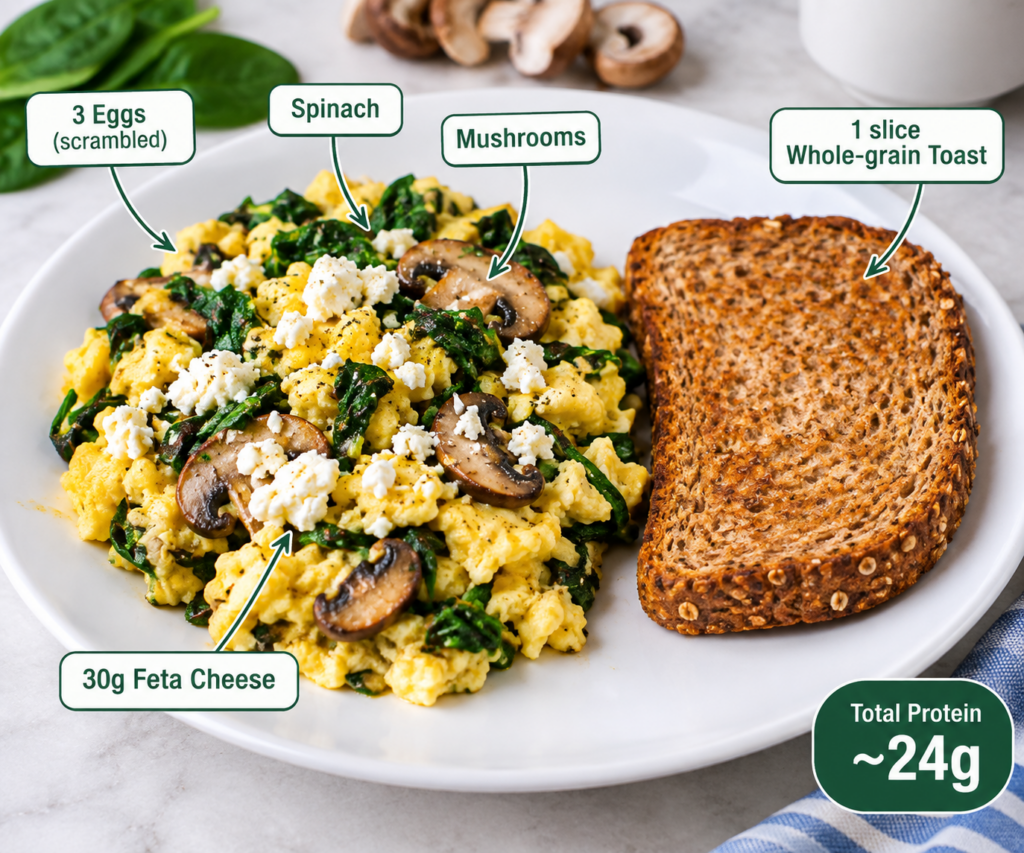
- 1 Breakfast: 3-egg scramble with spinach, mushrooms, and 30g feta cheese on 1 slice of whole-grain toast (~24g protein).
This breakfast combines eggs, spinach, mushrooms, feta cheese, and whole-grain toast for a nutrient-rich start to the day. The ingredients provide protein, vegetables, and whole grains in one meal. It offers variety and can help make breakfast more satisfying while adding important nutrients to an everyday eating routine.
- 2 Lunch: 1.5 cups of lentil and roasted vegetable soup with 1 hard-boiled egg (~26g protein).
This lunch combines lentil and roasted vegetable soup with a hard-boiled egg, providing a mix of plant and animal protein. Lentils also contribute fiber and nutrients, while roasted vegetables add variety. Together, these foods create a simple, nourishing meal that can fit into a balanced daily eating pattern.
- 3 Dinner: Paneer tikka masala (100g low-fat paneer) with 1/2 cup quinoa and roasted broccoli (~30g protein).
This dinner combines paneer, quinoa, and roasted broccoli to provide protein, carbohydrates, fiber, and important nutrients. Paneer adds protein, quinoa provides a nutritious grain option, and broccoli contributes vegetables and fiber. Together, these foods create a flavorful and varied meal that can support a balanced eating pattern.
- 4 Snack: 1 cup steamed edamame with sea salt (~17g protein).
This snack provides plant-based protein along with fiber and other nutrients from edamame. Steaming keeps preparation simple, while a small amount of sea salt can add flavor. As part of a varied eating pattern, edamame can be a convenient snack option that adds nutritional variety between regular meals.
Day 2
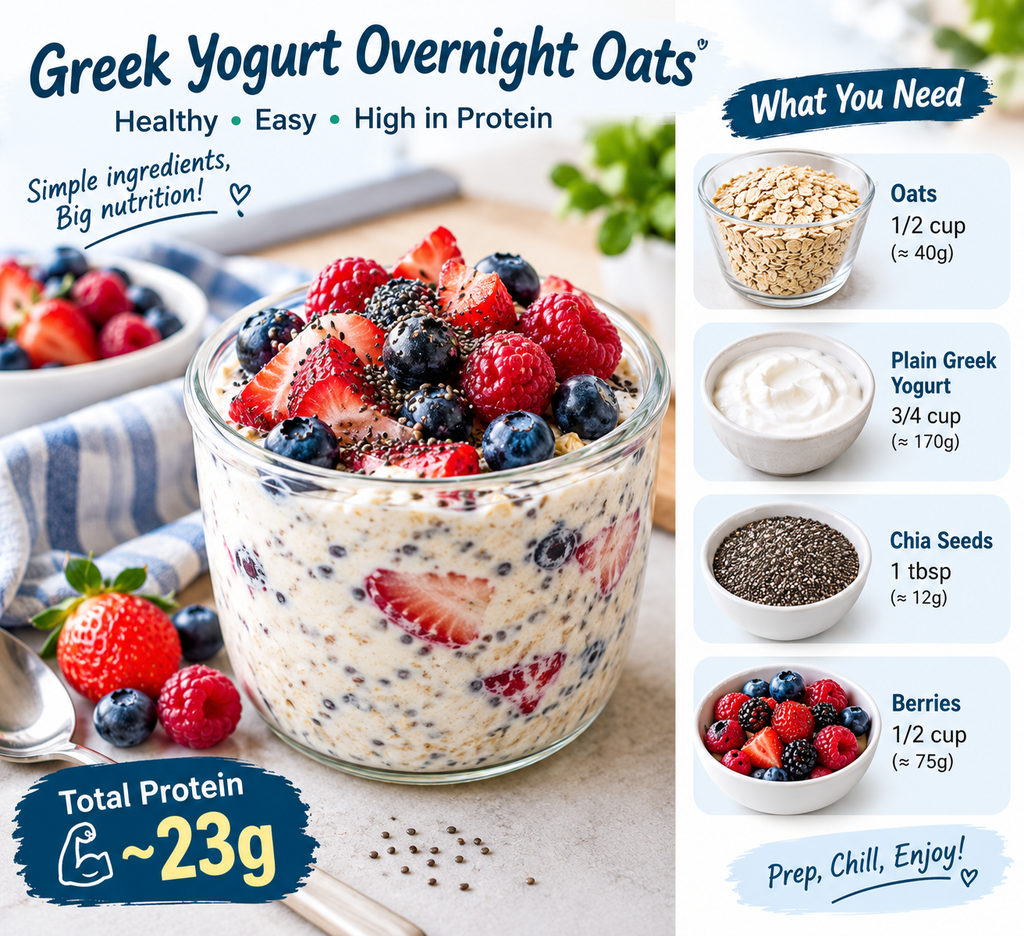
- Breakfast: Greek yogurt overnight oats (1/2 cup oats, 3/4 cup plain Greek yogurt, 1 tbsp chia seeds, and berries) (~23g protein).
This breakfast combines oats, Greek yogurt, chia seeds, and berries for a balanced and nutritious meal. Greek yogurt provides protein, while oats and chia seeds contribute fiber and other nutrients. Berries add natural sweetness and variety. Together, these ingredients create a convenient breakfast that can support a healthy daily eating pattern.
- Lunch: Chickpea and roasted pepper bowl over baby kale with 2 tbsp tahini dressing and 30g feta (~22g protein).
This lunch brings together chickpeas, roasted peppers, baby kale, tahini, and feta for a flavorful combination of plant-based foods and protein. Chickpeas provide protein and fiber, while kale and peppers add vegetables and nutrients. Tahini and feta contribute additional flavor, making this colorful bowl a varied and satisfying meal.
- Dinner: Baked sesame tempeh (2 oz) with bok choy, snap peas, and 1/2 cup brown rice (~28g protein).
This dinner combines tempeh, vegetables, and brown rice for a varied meal with protein, carbohydrates, and fiber. Tempeh provides plant-based protein, while bok choy and snap peas add vegetables and nutrients. Brown rice complements the dish with whole-grain goodness, creating a flavorful combination suitable for a balanced eating pattern.
- Snack: 1/2 cup cottage cheese with sliced cucumber (~14g protein).
Cottage cheese with sliced cucumber is a simple snack that combines protein with a refreshing vegetable. Cottage cheese provides protein and other nutrients, while cucumber adds crunch and hydration. The combination requires little preparation and can add variety between meals while fitting comfortably into an overall balanced and nutritious eating pattern.
Day 3
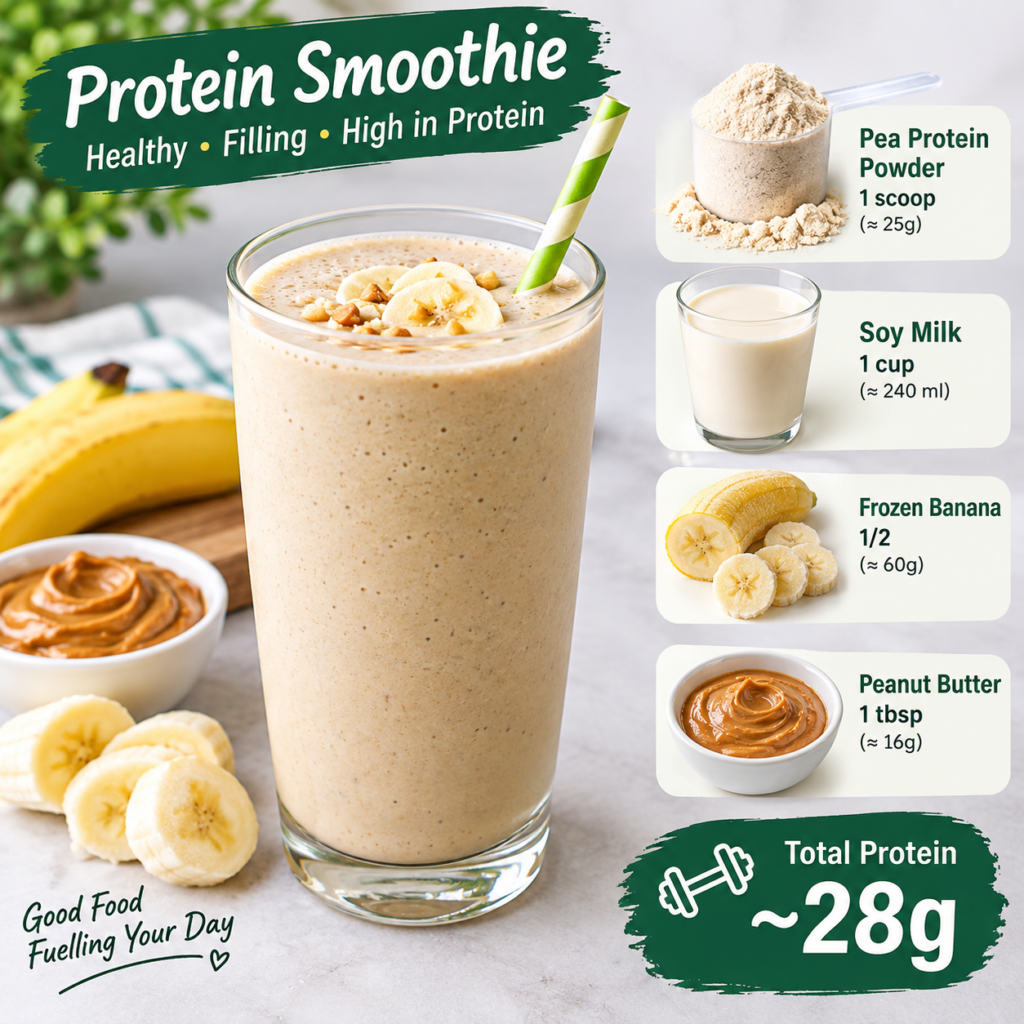
- Breakfast: Protein smoothie made with 1 scoop pea protein powder, 1 cup soy milk, 1/2 frozen banana, and 1 tbsp peanut butter (~28g protein).
This smoothie combines pea protein, soy milk, banana, and peanut butter to create a convenient breakfast with protein, carbohydrates, and healthy fats. The banana adds natural sweetness and fruit, while peanut butter provides additional flavor and nutrients. It is a simple option for a varied and balanced breakfast routine.
- Lunch: Black bean and sweet potato burrito bowl with salsa, guacamole, and 3 tbsp plain Greek yogurt instead of sour cream (~21g protein).
This burrito bowl combines black beans, sweet potato, salsa, guacamole, and Greek yogurt for a flavorful and varied meal. Black beans provide plant-based protein and fiber, while sweet potato adds carbohydrates and nutrients. Vegetables, avocado, and yogurt contribute additional variety, making this colorful bowl a nourishing everyday meal option.
- Dinner: Tofu (100g firm tofu) and mixed vegetable stir-fry over soba noodles with ginger-tamari sauce (~24g protein).
This dinner combines tofu, mixed vegetables, soba noodles, and a ginger-tamari sauce for a flavorful meal with plant-based protein and carbohydrates. Tofu provides protein, while vegetables add fiber and important nutrients. Soba noodles complement the dish, creating a satisfying combination that brings different textures, flavors, and ingredients together.
- Snack: 2 hard-boiled eggs with 3 tbsp hummus (~16g protein).
Hard-boiled eggs with hummus provide a convenient combination of protein and other nutrients. Eggs offer protein, while hummus made from chickpeas adds plant-based ingredients and fiber. This simple snack requires minimal preparation and can add variety between meals, making it an easy option within a balanced and varied eating pattern.
Top Vegetarian Protein Sources for Weight Loss
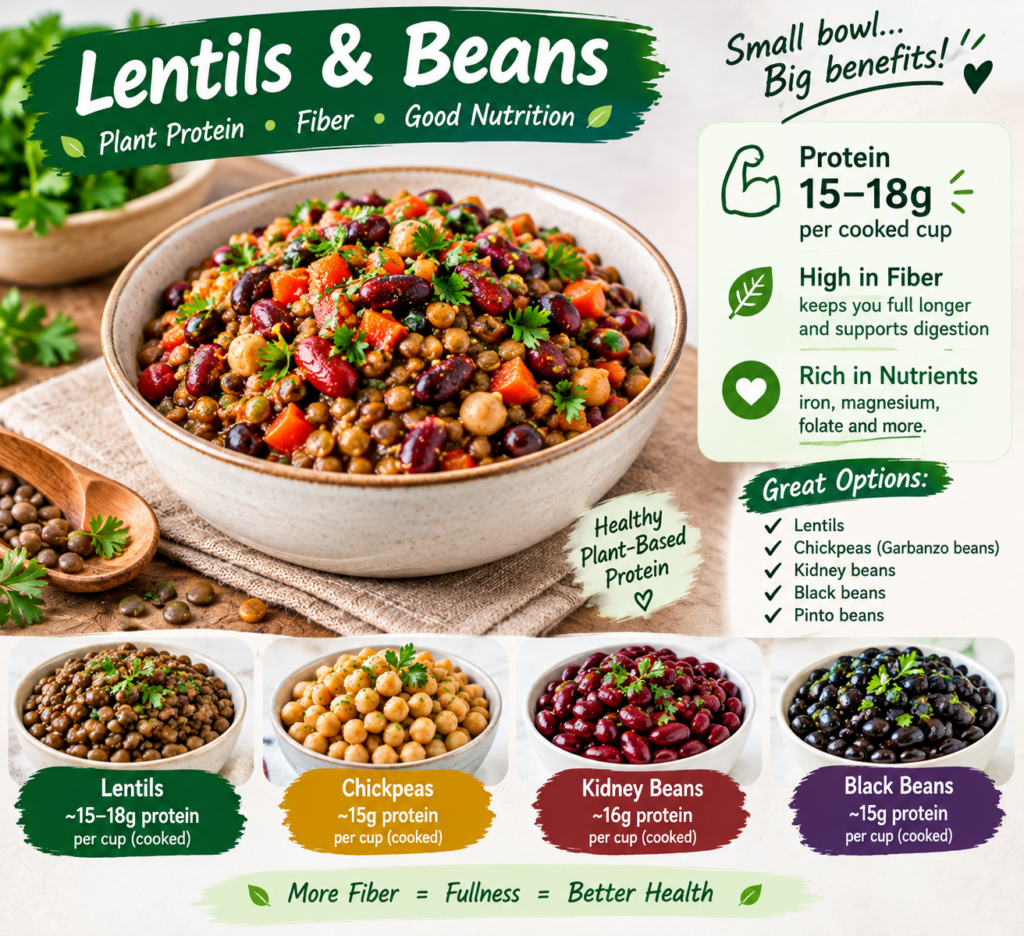
- Lentils & Beans: (~15–18g protein per cooked cup) – high in fiber for fullness.
Lentils and beans are affordable sources of plant-based protein and fiber. Their versatility makes them easy to include in soups, salads, bowls, and other meals. They can add nutritional variety while providing satisfying, nutrient-rich ingredients. Including different legumes in meals can support a balanced and varied eating pattern.
- Low-Fat Paneer / Tofu / Tempeh: (~10–18g protein per 100g) – dense and low in carbs.
Paneer, tofu, and tempeh provide convenient protein options with different textures and flavors. Tofu and tempeh are plant-based choices, while paneer can be used in many flavorful dishes. These foods work well in stir-fries, curries, bowls, and salads, helping add variety and protein to everyday meals.
- Greek Yogurt & Cottage Cheese: (~14–20g protein per serving) – great for snacks and breakfast.
Greek yogurt and cottage cheese are versatile foods that can provide protein at breakfast or snack time. They can be paired with fruit, oats, vegetables, or other ingredients depending on preference. Their convenient preparation makes them practical choices for adding variety and protein to a balanced daily eating pattern.
- Edamame: (~17–18g protein per cup) – quick and satisfying.
Edamame is a convenient plant-based food that provides protein, fiber, and other nutrients. It can be steamed and enjoyed as a simple snack or added to salads, bowls, and stir-fries. Its easy preparation and mild flavor make it a versatile ingredient for creating varied and nourishing meals.
For a complete weekly guide and grocery list, see the High Protein Vegetarian Meal Plan from BodEvolve.
Conclusion
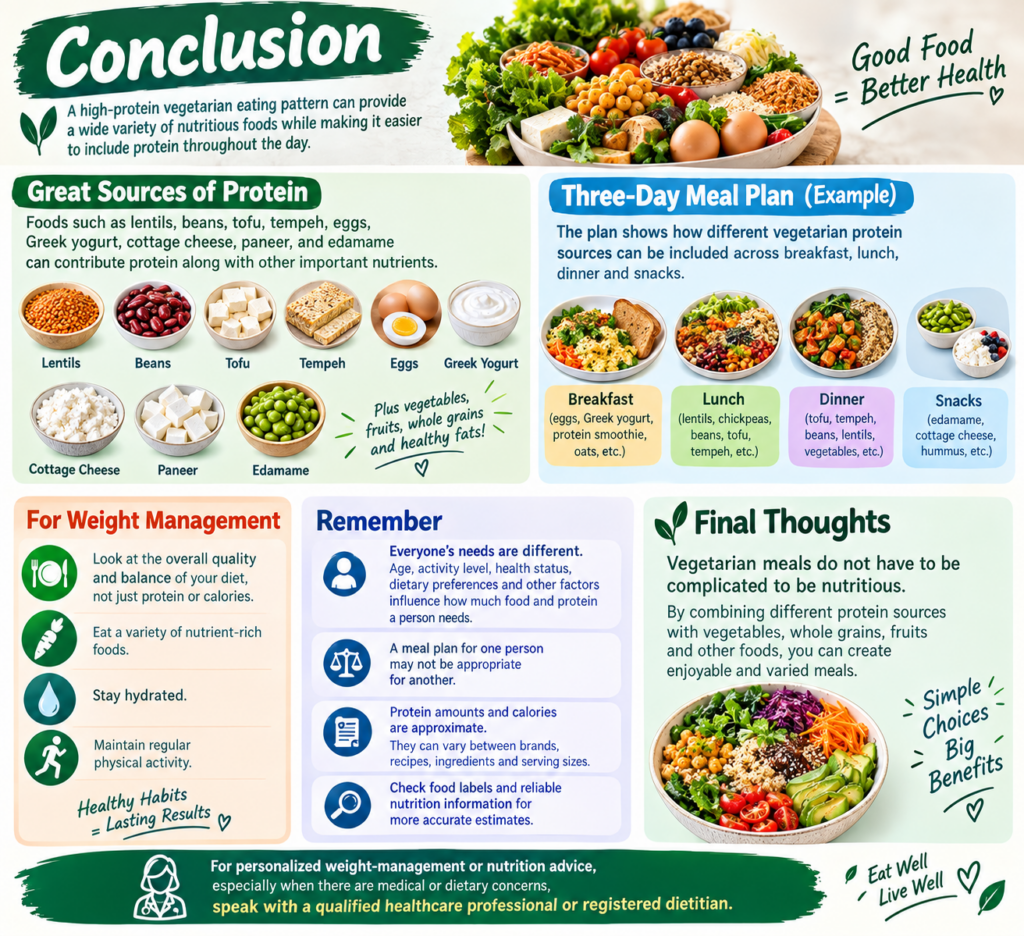
A high-protein vegetarian eating pattern can provide a wide variety of nutritious foods while making it easier to include protein throughout the day. Foods such as lentils, beans, tofu, tempeh, eggs, Greek yogurt, cottage cheese, paneer, and edamame can contribute protein along with other important nutrients. Combining these foods with vegetables, fruits, whole grains, and healthy sources of fat can create varied and satisfying meals.
The three-day meal plan in this article demonstrates how different vegetarian protein sources can be included across breakfast, lunch, dinner, and snacks. For example, eggs and Greek yogurt can be used at breakfast, while lentils, chickpeas, beans, tofu, and tempeh can form the foundation of lunch or dinner. Snacks such as edamame, cottage cheese, or hummus can provide additional variety.
For people interested in weight management, it is important to look at the overall quality and balance of the diet rather than focusing only on protein or calories. Eating a variety of nutrient-rich foods, paying attention to hunger and fullness, staying hydrated, and maintaining regular physical activity can all contribute to overall well-being.
It is also important to remember that nutritional needs are different for everyone. Age, activity level, health status, dietary preferences, and other factors can influence how much food and protein a person needs. A meal plan designed for one person may not be appropriate for another.
The protein amounts and calorie estimates included in a sample plan are also approximate because nutritional values can vary between brands, recipes, ingredients, and serving sizes. Checking food labels and reliable nutrition information can provide more accurate estimates.
Ultimately, vegetarian meals do not have to be complicated to be nutritious. By combining different protein sources with vegetables, whole grains, fruits, and other foods, people can create enjoyable and varied meals. For personalized weight-management or nutrition advice, especially when there are medical or dietary concerns, speaking with a qualified healthcare professional or registered dietitian is the safest approach.