Introduction
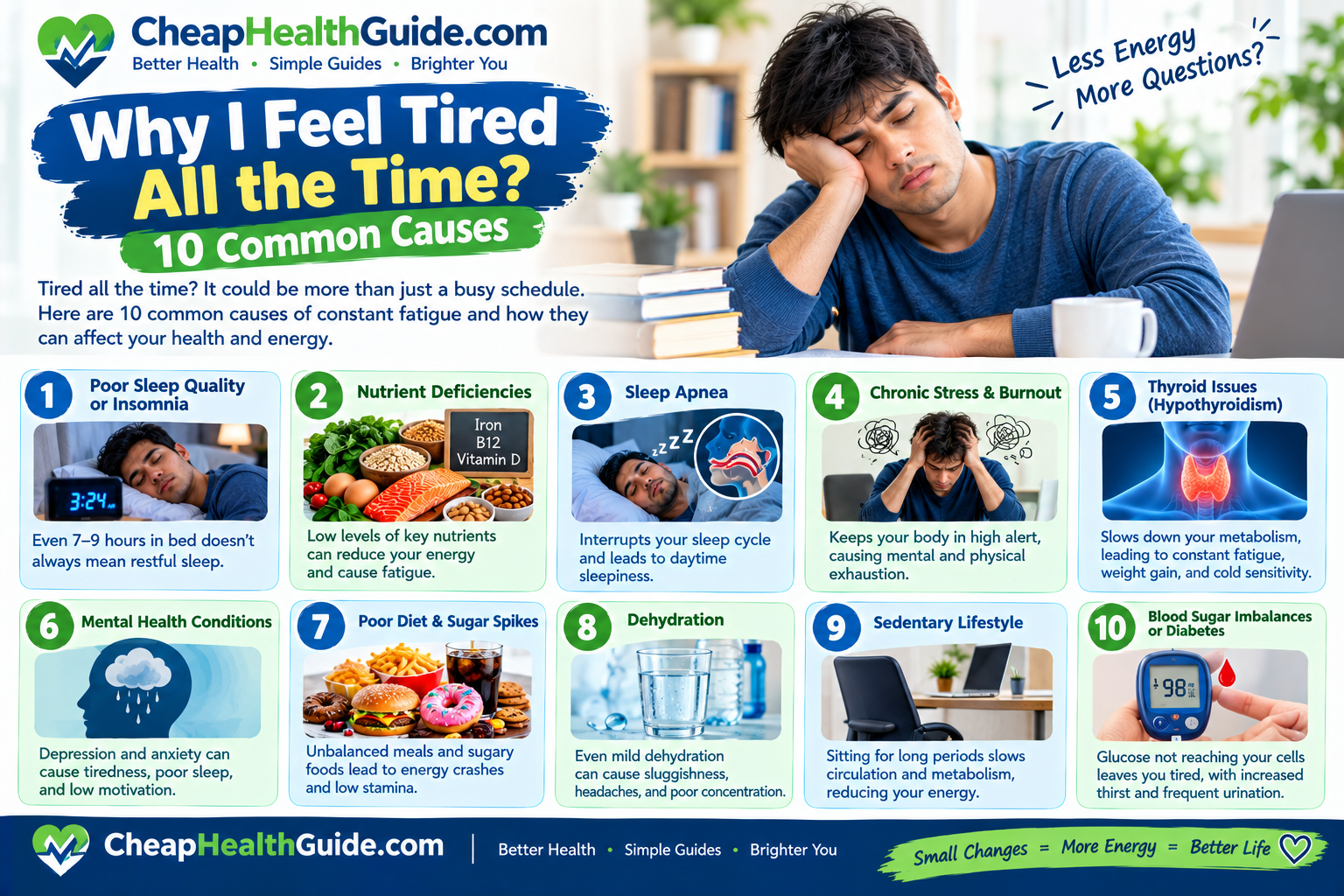
Feeling tired from time to time is normal, especially after a busy day, poor sleep, or increased activity. However, feeling exhausted regularly can have several possible causes. Sleep quality, nutrition, stress, hydration, physical activity, and certain health conditions can all influence how energetic a person feels throughout the day.
Sometimes, fatigue is connected to everyday habits that can be improved, while persistent tiredness may be related to an underlying health issue. Conditions such as sleep apnea, thyroid problems, nutrient deficiencies, or blood-sugar problems can sometimes contribute to ongoing fatigue. Mental and emotional stress can also affect energy, concentration, and sleep.
Understanding the possible causes of tiredness can help people pay closer attention to their health and recognize when professional medical advice may be appropriate. This article explores ten common causes of feeling tired and explains how each may affect everyday energy and well-being.
1. Poor Sleep Quality or Insomnia

Getting 7–9 hours in bed doesn’t mean you’re getting restorative sleep. Frequent nighttime awakenings, inconsistent sleep schedules, or a lack of deep sleep can leave you feeling drained all day.
Poor sleep quality can leave the body and mind without enough time to recover properly. Even when someone spends many hours in bed, repeated awakenings or an irregular schedule may reduce restorative sleep. Paying attention to consistent sleep habits and ongoing sleep problems can help support better daytime energy.
2. Nutrient Deficiencies

Low levels of key nutrients hinder your body’s energy production:
- Iron deficiency (Anemia): Reduces oxygen delivery to your tissues, leading to fatigue, weakness, and brain fog.
- Vitamin D & B12: Essential for nerve function, cell energy, and red blood cell production.
Certain nutrient deficiencies can contribute to tiredness, weakness, and difficulty concentrating. Iron, vitamin B12, and vitamin D all have important roles in normal body functions. However, fatigue does not automatically mean a deficiency is present. Appropriate medical evaluation and testing can help determine whether low nutrient levels are contributing.
3. Sleep Apnea

This disorder causes breathing to briefly stop and start repeatedly throughout the night. It breaks your sleep cycle without you realizing it, resulting in severe daytime sleepiness, loud snoring, or waking up gasping for air.
Sleep apnea can repeatedly interrupt normal sleep and prevent the body from getting restorative rest. People may not remember these interruptions but can experience significant daytime tiredness. Loud snoring, breathing pauses, or waking while gasping can be warning signs. Persistent symptoms should be discussed with a healthcare professional for proper evaluation.
4. Chronic Stress & Burnout

When you are under prolonged mental or physical stress, your body constantly produces stress hormones like cortisol. Over time, this leads to mental and physical burnout, making everyday tasks feel exhausting.
Long periods of stress can affect sleep, concentration, mood, and physical energy. When the body and mind remain under pressure for too long, ordinary responsibilities may feel more difficult. Healthy routines, sufficient rest, supportive relationships, and professional guidance when needed can help people manage persistent stress and protect overall well-being.
5. Thyroid Issues (Hypothyroidism)

The thyroid gland controls your metabolism. An underactive thyroid doesn’t produce enough thyroid hormone, which slows down your body’s systems, causing constant fatigue, weight gain, and cold sensitivity.
The thyroid influences metabolism and many important body processes. An underactive thyroid can sometimes cause fatigue, feeling unusually cold, constipation, or changes in weight and mood. Because these symptoms can have many possible causes, persistent tiredness should not automatically be attributed to thyroid problems without appropriate medical assessment.
6. Mental Health Conditions
Depression and anxiety take a heavy physical toll. Depression often causes low motivation, persistent tiredness, and disrupted sleep, while anxiety keeps the nervous system on high alert, exhausting your energy reserves.
Mental and emotional health can strongly influence physical energy and sleep. Anxiety and depression may be associated with tiredness, concentration difficulties, sleep changes, or reduced motivation. Recognizing these connections is important because persistent emotional exhaustion deserves attention and support. Talking with a trusted adult or healthcare professional can be helpful.
7. Poor Diet & Sugar Spikes
Consuming high amounts of refined carbohydrates, sugary snacks, or ultra-processed foods leads to rapid spikes and crashes in blood sugar. Additionally, not eating enough protein or total calories can leave your body underfueled.
Eating patterns can influence how energetic someone feels throughout the day. A diet lacking variety and important nutrients may contribute to tiredness, while highly processed foods may not provide balanced nutrition. Choosing varied meals with vegetables, whole grains, protein sources, fruits, and other nutritious foods can support overall energy and health.
8. Dehydration
Even mild dehydration lowers blood volume, making your heart work harder to pump oxygen and nutrients throughout your body. This leads to sluggishness, head discomfort, and poor concentration.
Not drinking enough fluids can contribute to tiredness, headaches, dizziness, and difficulty concentrating. Fluid requirements vary between people and can increase with hot weather or physical activity. Drinking fluids regularly and responding to thirst are practical ways to support hydration. Persistent or severe symptoms should be discussed with a healthcare professional.
9. Sedentary Lifestyle
Sitting for long periods slows down circulation and metabolism. While it sounds counterintuitive when you are already tired, regular physical activity boosts cardiovascular health and overall energy levels.
Spending most of the day sitting can contribute to lower activity levels and reduced overall fitness. Regular movement can support cardiovascular health, mood, circulation, and everyday functioning. Physical activity does not need to be intense; simple movement breaks and age-appropriate activities throughout the day can help reduce prolonged periods of inactivity.
10. Blood Sugar Imbalances or Diabetes
When your body struggles to produce or properly use insulin, glucose remains in the bloodstream instead of entering your cells to be used for energy. This leaves your cells starved for fuel, causing fatigue alongside symptoms like increased thirst and frequent urination.
Blood-sugar problems can sometimes contribute to persistent tiredness and may occur alongside symptoms such as increased thirst or frequent urination. However, fatigue has many possible causes and cannot diagnose diabetes by itself. If concerning symptoms continue, speaking with a healthcare professional and receiving appropriate testing can help identify the underlying cause.
Conclusion
Feeling tired all the time can have many different causes, ranging from everyday habits to underlying health conditions. Poor sleep, stress, dehydration, limited physical activity, and an unbalanced diet can all affect how energetic a person feels. At the same time, persistent fatigue may sometimes be associated with nutrient deficiencies, sleep apnea, thyroid problems, mental health conditions, or blood-sugar issues.
The important point is that tiredness is a symptom, not a diagnosis. One person may feel exhausted because of poor sleep, while another may have a completely different reason. It is therefore better to look at the overall pattern rather than assuming that one particular cause is responsible.
Healthy daily habits can support better energy and general well-being. Maintaining a consistent sleep routine, eating a varied diet, drinking enough fluids, taking regular movement breaks, and managing stress can all contribute to healthier daily routines. However, these habits should not replace professional medical care when fatigue is persistent, severe, or unexplained.
People should also pay attention to other symptoms that occur alongside tiredness. Changes in sleep, unusual thirst, frequent urination, breathing problems during sleep, persistent weakness, or significant changes in mood may provide useful information about what is happening. A healthcare professional can consider symptoms, medical history, lifestyle, and appropriate tests when investigating ongoing fatigue.
It is also important to avoid self-diagnosing based only on online information. Symptoms such as tiredness can overlap across many different conditions, and proper evaluation may be necessary to determine the actual cause.
Ultimately, feeling tired all the time should not simply be ignored when it continues or interferes with everyday life. Understanding the possible causes can help people recognize patterns, improve healthy habits, and seek appropriate support when needed. With careful attention and professional guidance when appropriate, persistent fatigue can be investigated rather than accepted as something a person simply has to live with.