Introduction
Middle age is an important stage of life when maintaining healthy daily habits can become increasingly valuable. As people get older, concerns related to heart health, blood pressure, bones, digestion, and overall well-being may become more important. A balanced diet that includes plenty of vegetables can provide essential vitamins, minerals, fiber, and plant compounds that support normal body functions.
Vegetables are not a cure for medical conditions, but they can be an important part of a nutritious eating pattern. Different vegetables provide different nutrients, so eating a variety of colors and types can help provide broader nutritional benefits. Leafy greens, cruciferous vegetables, and colorful root vegetables can all be included in everyday meals in simple and affordable ways.
This article explores several useful vegetable groups and explains practical ways to include more vegetables in daily meals while supporting a balanced and healthy lifestyle.
Key Vegetables and Their Benefits
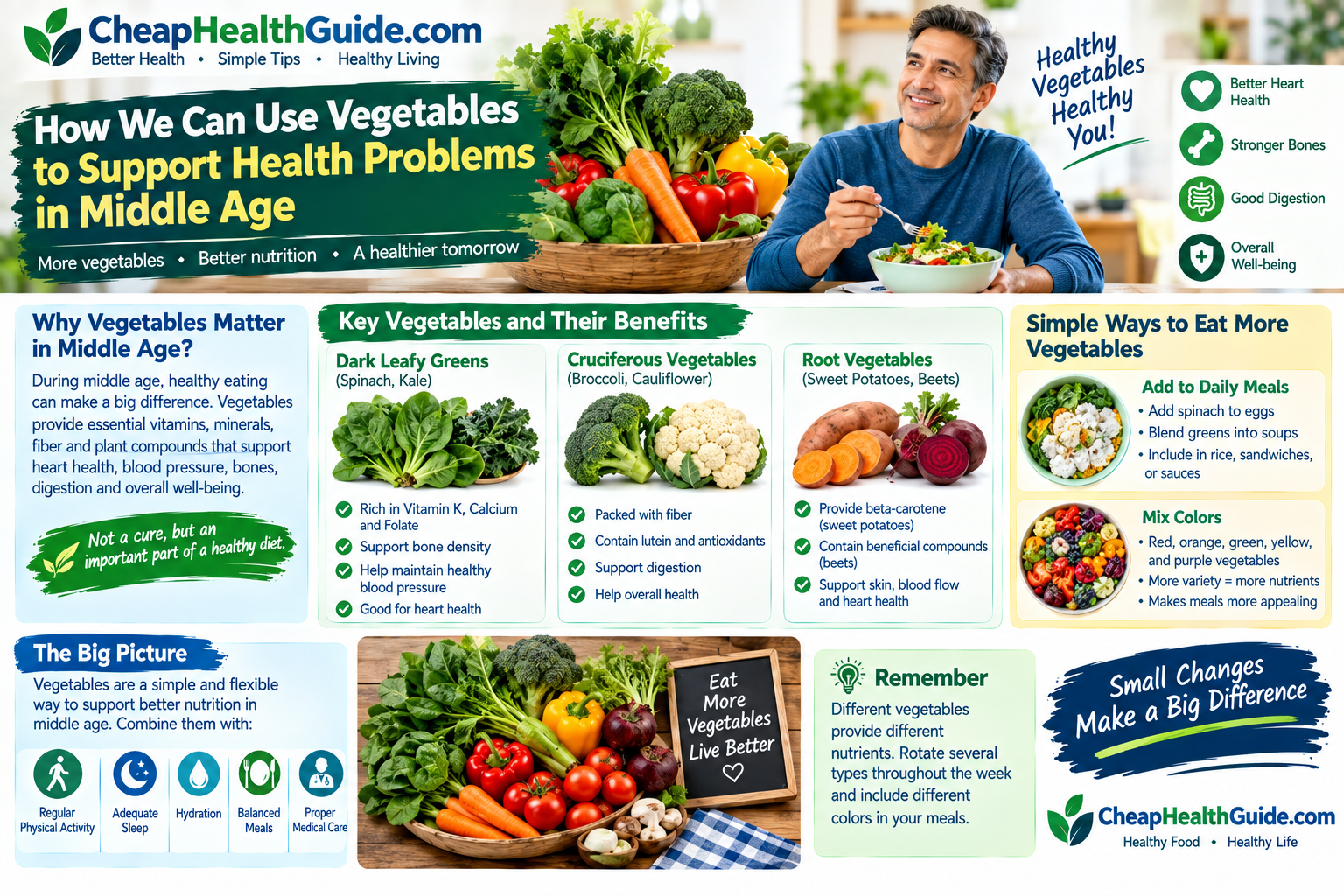
Dark Leafy Greens (Spinach, Kale): Rich in Vitamin K, Calcium, and Folate to Support Bone Density, Healthy Blood Pressure, and Heart Health

Dark leafy greens such as spinach and kale provide important nutrients including vitamin K, folate, calcium, and various plant compounds. Including these vegetables regularly can contribute to a balanced diet and support normal bone and cardiovascular health. They can be added to salads, soups, eggs, sandwiches, or cooked meals for convenience.
Cruciferous Vegetables (Broccoli, Cauliflower): Packed With Fiber, Lutein, and Antioxidants That Support Overall Health

Broccoli and cauliflower provide fiber, vitamins, minerals, and beneficial plant compounds. Their nutrients can support healthy digestion and contribute to an overall nutritious eating pattern. Adding cruciferous vegetables to meals is a simple way to increase vegetable variety while providing the body with important nutrients associated with maintaining normal health and well-being.
Root Vegetables (Sweet Potatoes, Beets): Provide Beta-Carotene and Other Nutrients That Support Skin, Blood Flow, and Heart Health

Root vegetables such as sweet potatoes and beets offer different nutrients that can complement a balanced diet. Sweet potatoes provide beta-carotene, while beets contain naturally occurring compounds such as dietary nitrates. Including these foods alongside other vegetables can add variety, fiber, and useful nutrients to everyday meals.
Simple Ways to Eat More Vegetables
Add to Daily Meals: Include Vegetables in Meals, Such as Adding Spinach to Eggs or Blending Greens Into Soups and Sauces

Adding vegetables to foods you already enjoy can make healthy eating easier and more practical. Spinach can be added to eggs, while chopped vegetables can be included in soups, sauces, rice, or sandwiches. These simple changes can increase vegetable intake without requiring complicated recipes or major changes to everyday meals.
Mix Colors: Combine Red, Orange, Green, and Purple Vegetables to Get a Diverse Mix of Plant Nutrients

Eating vegetables in different colors is a simple way to increase dietary variety. Green, red, orange, yellow, and purple vegetables contain different combinations of vitamins, minerals, and plant compounds. Mixing several colors throughout the week can make meals more appealing while helping provide a broader range of nutrients from plant foods.
Conclusion
Vegetables can play an important role in supporting a healthy lifestyle during middle age. They provide a combination of fiber, vitamins, minerals, and beneficial plant compounds that contribute to normal body functions and overall nutrition. While vegetables cannot prevent or cure every health problem, regularly including them in a balanced diet can be a practical way to support long-term well-being.
Dark leafy greens such as spinach and kale provide nutrients that are important for bones and general health. Cruciferous vegetables such as broccoli and cauliflower add fiber and a variety of plant compounds to meals. Root vegetables, including sweet potatoes and beets, provide additional nutrients and can bring different flavors and textures to everyday food.
Variety is particularly useful because different vegetables contain different nutritional components. Instead of depending on one specific vegetable, people can rotate several types throughout the week and include different colors in their meals. This can make a healthy diet more enjoyable while providing a broader range of nutrients.
Increasing vegetable intake does not have to involve complicated meal plans. Vegetables can be added to familiar foods such as eggs, soups, rice dishes, sandwiches, salads, and sauces. Choosing fresh, frozen, or appropriately prepared vegetables can also make healthy eating more convenient.
For people in middle age, vegetables are best considered one part of a broader healthy lifestyle. Regular physical activity, adequate sleep, hydration, balanced meals, and appropriate medical care can also contribute to overall health. Anyone with a diagnosed medical condition or specific dietary needs should follow advice from a qualified healthcare professional.
Ultimately, eating more vegetables is a simple and flexible habit that can support better nutrition. By choosing a variety of vegetables and including them regularly in everyday meals, people can make their diet more nutrient-rich and support their overall health as they move through middle age.